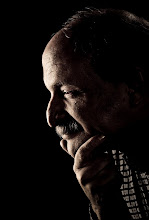
Any moralist will tell you that the personal triumph of an athlete or of a girl at a ball is transitory: the point is to remember that an empire or a civilization is also transitory. All achievements and triumphs, in so far as they are merely this-worldly achievements and triumphs, will come to nothing in the end.
C. S. Lewis, 1808-1963, The World's Last Night, The World's Last Night and Other Essays. (Harcourt Brace Jovanovich, 1960. p. 110)
How should this affect how we look at the world? How should it affect how we live our lives?
Friday, January 31, 2014

Thursday, January 30, 2014
Science Only

But there is a bigger problem. If science is the only way of arriving at truth, then science becomes impossible. For then every experimenter must repeat every experiment for themselves. Scientists would end up spending so much time repeating old experiments they would never make any new discoveries. Further, real scientific proof is based on the results being reproducible by independent researchers. But that means they have to be willing to trust that the results have been obtained by others. And you cannot prove this scientifically. Now if you try to add testimony to proofs used under the scientific method, at this point you enlarge it to include just about everything (including the testimony of those who claimed Jesus Christ rose from the dead). Now there is bad testimony, as there are bad experiments; each must be judged on its own merits. But if science means nothing more than a good argument, the term becomes meaningless. It is better to give a clear definition of the term and admit there are issues not dealt with by science. And to recognize we need to use other methods in those cases to come to reliable conclusions.
Wednesday, January 29, 2014
God's Grace - A Song

God’s Grace
By Mike Erich
To the tune of “The Lord’s My Shepherd” (Crimond)
God’s grace, it all sufficient is,
In weakness makes us strong;
And in the watches of the night
He always gives a song.
All of my needs He does supply,
He gives me daily bread;
Though I dwell in a wilderness,
By ravens I am fed.
When present light affliction here
Appears as trials sore,
I know He’s treasured up for me
Glory beyond compare.
If I must pass through stormy seas,
He’s ever by my side;
If I must go through darksome vale,
He ever is my guide.
And when temptations round me mount
Or my weak flesh holds sway,
He covers my sins with His blood,
And escape provides a way.
When all my efforts seem to yield
Nothing but barren sod,
I remember Christ will build His church,
And the increase comes from God.
I know whate'er my task may be,
Whate'er my gift or lot,
That Christ’s the one who placed me there;
My deeds are not forgot.
And when my course on earth is run
I shall behold His face;
I’ll dwell in peace, the battle won,
All through His wondrous grace.
(Should anyone wish to use this song, permission is granted, provided it is not altered or sold or performed for monetary gain without the author's prior agreement.)
Tuesday, January 28, 2014
Making Things Easy

However, can we solve the problem by just accepting a tradition? We would need to start by deciding which of the conflicting traditions we should follow. If the Bible was clear about which tradition to follow, we could base it on that. But it is not. And if the Bible is too difficult to interpret alone, then using it to choose a tradition if it is not inarguable leaves us right back where we were. Further, there is no basis for assuming that historical continuity proves authority. And there is more than one group that claims historical continuity.
Then we have to decide what is authoritative within that tradition. Then we have to bring together these authoritative elements and interpret them to decide what real Christianity is. Take, for example, the Roman Catholic Church. It claims the pope is infallible. Therefore, if I want to know what is authoritative, I need to assemble the ex cathedra utterances of all the popes. (This assumes I can figure out which are ex cathedra.) Then I need to bring them together and interpret them. (I would tend to agree with Luther that popes and councils contradict. But if I thought they were authoritative, I would have to make the effort to reconcile them.) Now if I really believed this was the case, I would make the effort. But I cannot see how this can be seen as simpler than 66 books I can hold in my hand
Now we could try to avoid this process by trusting the local representative of the authoritative church. But this representative is not infallible and may lead us astray. It we are to determine the truth, we need to think it through for ourselves. And if we do, we need to start with the Bible, which is the first clear collection of Christian teaching. For to claim a particular tradition is authoritative and then interpret the Bible by the tradition is to engage in circular reasoning. And you cannot make things easier by following this path.
Monday, January 27, 2014
A Touch of Humor - Seeing the Point

Saturday, January 25, 2014
Old Erich Proverb - All
God is not content to occupy some religious corner of our life; He wants all of it.
Friday, January 24, 2014
A Voice from the Past - Gregory
But, because He had come in the flesh to this end, that He might not only redeem us by His passion but also but also teach us by His conversation, offering Himself as an example to His followers, He would not be made a king; but He went of His own accord to the gibbet of the cross. He fled from the offered glory of pre-eminence, but desired the pain of an ignominious death; that so His members might learn to fly from the favors of the world, to be afraid of no terrors, to love adversity for the truth's sake, and to shrink in fear from prosperity;
Gregory the Great, Pastoral Rule, Part I, Chapter III, (translated by Rev. James Barmby, The Nicene and Post -Nicene Fathers, Second Series, Vol. XII, Philip Schaff and Henry Wace, T & T Clarke and Wm. B. Eerdmans Publishing, 1997, p. 3)
What does this tell us about the attitude of the Christian toward life? How can we live it out?
Gregory the Great, Pastoral Rule, Part I, Chapter III, (translated by Rev. James Barmby, The Nicene and Post -Nicene Fathers, Second Series, Vol. XII, Philip Schaff and Henry Wace, T & T Clarke and Wm. B. Eerdmans Publishing, 1997, p. 3)
What does this tell us about the attitude of the Christian toward life? How can we live it out?
Subscribe to:
Posts (Atom)