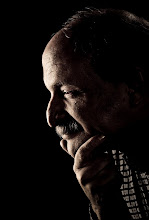
George Oliver paced slowly along the rampart, his blaster slung over his shoulder. He gazed down upon the no-man's-land of electronic barriers that kept the enemy at bay. There were electronic surveillance devices to warn them of approaching attacks. But since the great drone offensive, when someone had found a way to hack in and temporarily bring the system down, George had not totally trusted the mechanics.
It did not help that they were hemmed in on two fronts. The western front was solid from Canada to Mexico, and they opposed anyone crossing their borders. The eastern front was open in the south, and some tried to escape past the shore patrol to safe places like China and Uganda. But George was not ready for that yet. This was his home, and he intended to stay and defend it.
What had gone wrong, and how had it gotten this bad? thought George. Neither side had been completely innocent; both had helped to escalate the war of words. Then had come the law suits, the arrests, and the imprisonments. Maybe it would have better if we had just been willing to suffer like Christians rather than fight back. But slowly a resistance movement had grown until it had ended in full-scale war. It had been fortunate for them that a good part of the military had proved to be on their side. And now here they were, cut off by walls on either side. And there seemed to be some who liked it that way. George hated it. He wanted to reach out to those on the other side of the line, to find a way to make peace, to tell them about the love of Christ. But he did not know how to do it.
His reverie was broken off by a sharp buzz. He went to the nearest surveillance panel to check it out. There was one, seemingly unarmed, drone hovering, just outside the perimeter. And it was broadcasting an offer to parley. Did he dare let it in? It could be a trap. But was he willing to pass up the possibility it might not be? He alerted his own drones to destroy it if it made a false move, but he told the surveillance system to let it through.
He took cover behind the corner of a tower, with his blaster leveled at the intruder. How useless this could be if the drone had a weapon that the scanners had not detected he knew very well. The drone came in slowly and hovered directly in front of him. On the cone of the device there was a large video screen. As it neared, there appeared on it a young man with a tense smile.
"We wanted to send you a message," began the young man, "but we are both too afraid of hackers and propagandists to let our systems interface. This has proved the only way to reach you. We have tried to eliminate religion, or at least what we thought was inappropriate religion. We have failed. The more we tried to suppress them, the more they multiplied. We have decided to find a way to make peace. And we also would like to explore making peace with you. We want to become one people again. It will not be easy. But we believe it is worth doing. Will you join us in this?"
George was still not sure this whole thing was not a trap. But could he let the opportunity get away if it was not?
Tuesday, April 8, 2014
Monday, April 7, 2014
Saturday, April 5, 2014
Old Erich Proverb - Recycling
There have been every few fundamentally new theological and philosophical systems in the history of the world, but the old ones get recycled on a regular basis.
Friday, April 4, 2014
A Voice from the Past - Polycarp
And let the presbyters be compassionate and merciful to all, bringing back those that wander, visiting all the sick, and not neglecting the widow, the orphan, or the poor, but always “providing for that which is becoming in the sight of God and man;” abstaining from all wrath, respect of persons, and unjust judgment; keeping far off from all covetousness, not quickly crediting [an evil report] against any one, not severe in judgment, as knowing that we are all under a debt of sin.
Polycarp, 69-115 AD, Epistle of Polycarp to the Philippians, Chapter IV, (The Apostolic Fathers with Justin Martyr and Irenaeus, Philip Schaff, Wm. B. Eerdmans Publishing, 2001, p. 53)
What kind of qualities should we look for in a leader? How should we go about producing them?
Polycarp, 69-115 AD, Epistle of Polycarp to the Philippians, Chapter IV, (The Apostolic Fathers with Justin Martyr and Irenaeus, Philip Schaff, Wm. B. Eerdmans Publishing, 2001, p. 53)
What kind of qualities should we look for in a leader? How should we go about producing them?
Thursday, April 3, 2014
Polycarp - The Disciple
Polycarp, bishop of Smyrna, was a disciple of the Apostle John. We have this from Irenaeus, who studied under Polycarp in Polycarp's later life. We have only one letter from Polycarp, though we have a letter to him by Ignatius (Lord willing, the subject of a future post). Polycarp's letter is steeped in Scripture, particularly the New Testament. In fact, one of the frustrating things about Polycarp is that he alludes to Scripture so frequently that it is hard to get a good feel for his own personality. His letter is to the Philippians and is a general encouragement to live as we should as Christians. But it also clearly mentions Jesus as the One who came in the flesh to save us from sin and rise again from the dead and who will one day resurrect those who believe in Him. He mentions Paul and his letter to the Philippians and the letters of Ignatius, his contemporary. Even more than Clement, he has no particular axe to grind and makes sense as a real witness to his time. According to Irenaeus, he argued for charity and acceptance in the dispute over the day of Easter. He also passed on to Irenaeus some stories of the Apostle John in later life. There is an early account of his martyrdom at an old age and how he stood firm until death.
The thing Polycarp exemplifies is faithfulness. He is important because of his early relation to the apostles. He does not seem to have introduced any new or unusual idea. But he was a faithful servant of God, faithful even to death. He was an early witness to what Christianity was from the very beginning. And he is an example for us of a faithful pastor who did his job well and, as a result of that, left us a legacy. Such men are the backbone of the church in any age, the faithful, though, in many cases, unnoticed pastors who faithfully shepherd the flock of God.
Wednesday, April 2, 2014
Finding Our Way Through the Maze
Tuesday, April 1, 2014
Grace and The Body of Christ
Christians have been taught that we need God's grace. We need God's grace to be saved (Ephesians 2:8,9; Romans 3:23-28; Titus 3:4-6). We also need it to live for God (2 Peter 1:3; Ephesians 2:10; 2 Corinthians 3:18). But sometimes we get the idea that when we come together with other Christians to do God's work, we are on our own, and everything depends on our ability and hard work. Christ said He would build His church (Matthew 16:18; 1 Corinthians 3:7,8; 1 Peter 2:4,5). It is described as a body that grows and develops together (Ephesians 4:11-16; Colossians 2:19; 1 Corinthians 12:12-27). And the work of those building one another up is rooted in God's power (Colossians 1:29; 2 Corinthians 12:7-9; Ephesians 3:7,8). Now God does call us to faithfulness and diligence (1 Corinthians 4:2; Colossians 1:28; 2 Timothy 4:1-4). But this is not the same as seeing the fate of the church as dependent on our labors.
This is important because if we trust in ourselves, we end up trying to convince ourselves that we are successful. And we can try to measure this by external criteria, such as numbers, size of buildings, and impressiveness of programs, rather than real spiritual growth in the lives of people. If we convince ourselves we are successful, we can become proud, which is a dangerous spiritual state (Proverbs 16:18). We can start to believe we can do no wrong and end up being blindsided by our own weaknesses. We can start to believe anything is acceptable as long as it brings or maintains success. But if we do not succeed, we can become discouraged. If we are not leaders, we can blame whoever is in charge. While those in charge can blame the people for not being behind them. And we end up dividing the body of Christ into those who are successful and those who are not.
Now I am not saying we should never evaluate what we are doing. But I am convinced the basic thing we need to do is trust God (Psalms 127:1,2; Proverbs 3:5,6; Isaiah 31:1). And we need to be very careful about judging ourselves or others, especially based on superficial criteria (1 Corinthians 4:3-5; James 4:11,12; Romans 14:4). This means also avoiding the opposite reaction of concluding that everyone with external success must be compromised in their walk with God and only trying to please other people. There may be those who are like that (2 Timothy 4:3,4; Matthew 23:5-7; Galatians 1:10). Each case must be decided on its own merits. But there are others who God has called to a particular prominent ministry that fits our criteria for success. Rather, we should try to ask, how can we encourage and build up one another in whatever situation we are in (Hebrew 10:24,25; 12:12,13; Romans 12:15,16)? So that we might work together to accomplish what God wants to accomplish through us. And might start by trusting in Him rather than ourselves.
This is important because if we trust in ourselves, we end up trying to convince ourselves that we are successful. And we can try to measure this by external criteria, such as numbers, size of buildings, and impressiveness of programs, rather than real spiritual growth in the lives of people. If we convince ourselves we are successful, we can become proud, which is a dangerous spiritual state (Proverbs 16:18). We can start to believe we can do no wrong and end up being blindsided by our own weaknesses. We can start to believe anything is acceptable as long as it brings or maintains success. But if we do not succeed, we can become discouraged. If we are not leaders, we can blame whoever is in charge. While those in charge can blame the people for not being behind them. And we end up dividing the body of Christ into those who are successful and those who are not.
Now I am not saying we should never evaluate what we are doing. But I am convinced the basic thing we need to do is trust God (Psalms 127:1,2; Proverbs 3:5,6; Isaiah 31:1). And we need to be very careful about judging ourselves or others, especially based on superficial criteria (1 Corinthians 4:3-5; James 4:11,12; Romans 14:4). This means also avoiding the opposite reaction of concluding that everyone with external success must be compromised in their walk with God and only trying to please other people. There may be those who are like that (2 Timothy 4:3,4; Matthew 23:5-7; Galatians 1:10). Each case must be decided on its own merits. But there are others who God has called to a particular prominent ministry that fits our criteria for success. Rather, we should try to ask, how can we encourage and build up one another in whatever situation we are in (Hebrew 10:24,25; 12:12,13; Romans 12:15,16)? So that we might work together to accomplish what God wants to accomplish through us. And might start by trusting in Him rather than ourselves.
Subscribe to:
Posts (Atom)